Moving 101 brought to you by Stewart Moving & Storage
Ask the Experts- Short distance moves versus Long distance moves
Moving 101 brought to you by Stewart Moving & Storage
Unless you’ve relocated a TON in your life with the help of professional movers you probably don’t know the ins and outs of what makes a move short distance versus long distance, intrastate versus interstate or what these differences between them means to you- the customer. The nuances may seem like transportation industry lingo but the implications of not being prepared properly for your specific move perimeters, you can be stuck paying more than you need to.
In this edition of Ask the Experts- Moving 101; we’ll explain what the common terms around the distance of a relocation mean and what you can expect with each type of move.
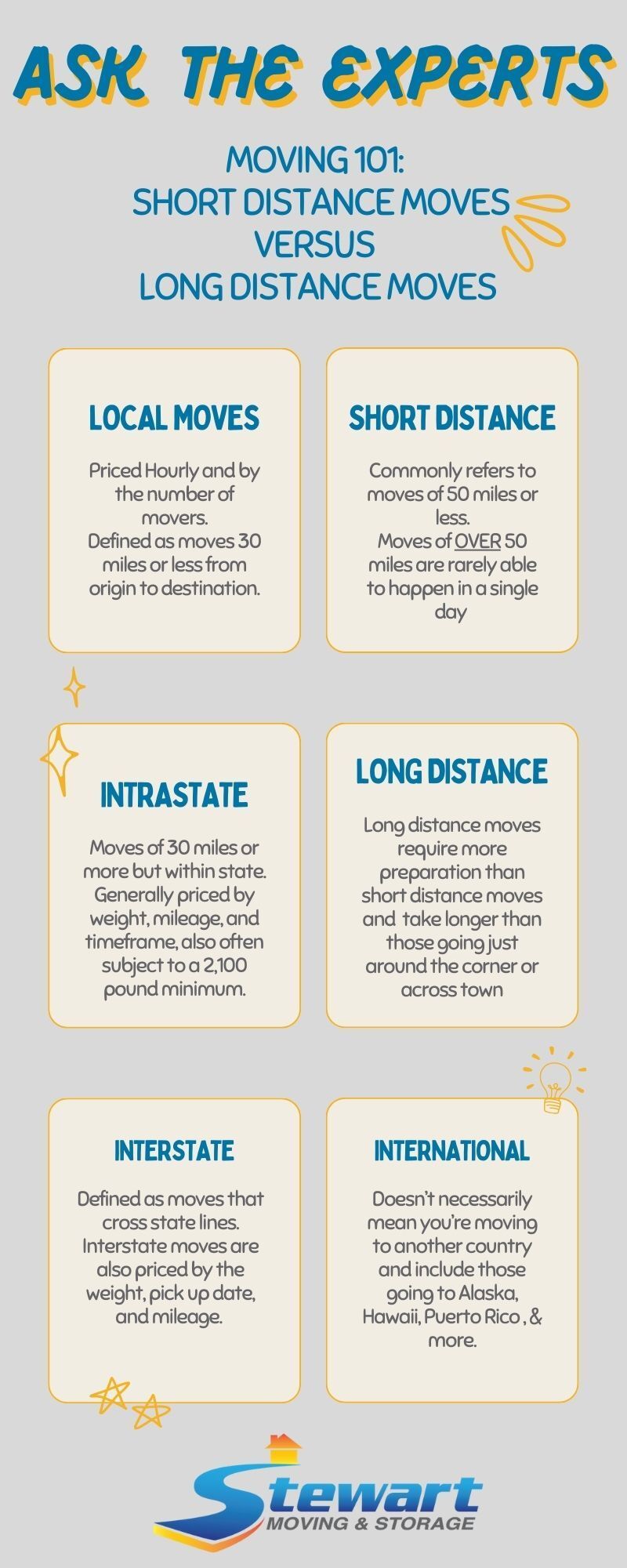
Local moves: These are moves of 30 miles or less and traditionally priced by the hour with the rate depending on the # of movers and the time of year. Expect higher rates in summer, like vacation rentals, when demand soars as schools let out for the summer.
Short Distance moves: This isn’t a moving or relocation industry term. It commonly refers to moves of 50 miles or less and this distinction has very little to do with the actual logistics or pricing. However, moves of OVER 50 miles are rarely able to happen in a single day due to Department of Transportation guidelines on hours of service for truck drivers.
Intrastate moves: These are moves of 30 miles or more but within state. These moves are generally priced by weight, mileage, and timeframe- and often subject to a 2100 pound minimum. Just like Local moves, Intrastate moves often see higher prices in peak season. Larger Intrastate moves are also usually require more than 1 day to load, transit, and deliver due to drive time. In regulated states (l ike North Carolina and Virginia, for example) moves of 30 or more miles require additional registrations-check with your state’s DOT to learn if this applies to you.
Long Distance moves: Also, not an industry specific term, but important nonetheless. Long distance moves require more preparation than short distance moves. Items need better protection, trucks must be loaded tighter, and long distance moves simply take longer than those going just around the corner or across town.
Interstate moves: These are simply moves that cross state lines. Interstate moves are also priced by the weight, pick up date, and mileage. Interstate moving companies are required to have DOT numbers published on their website and be registered with the Federal Motor carrier Safety Administration (https://www.fmcsa.dot.gov/). Nuances for interstate moves include not being able to move live plants in the trucks and making sure you know if YOUR mover is a broker or an actual moving companies- there are pros and cons to both; being informed is the first step to making the best decision for your interstate move!
International moves: While we are at it- we might as well share a bit about these, very special and nuanced relocations. While they are called International- it doesn’t necessarily mean you’re moving to another country! Fun, huh? International moves also include those going to Alaska, Hawaii, Puerto Rico or any place that would require transit across or over international waters, airspace, or through another country to the destination. Depending on where you’re going, it may be more cost effective to ship than replace larger items- OR- vice versa… do your homework, including finding a capable, international relocation partner (https://www.iamovers.org)
Preparing for any distance move is the same- start planning early (60 days in Peak season or for long distance moves), purge unwanted items, pack properly to ensure safe transport of your belongings, and research your preferred moving partner well in advance- getting a couple quotes is always recommended!