Books are some of the heaviest items you'll move, and they deserve special care during the packing process. Whether you're relocating a small collection or an entire home library, knowing how to pack books for moving properly protects your investment and prevents damage during transport. The good news? With the right approach and supplies, packing books doesn't have to be complicated or time-consuming.
At Stewart Moving & Storage, we've helped thousands of families safely relocate their treasured book collections across town and across the country. The best way to pack books for moving comes down to using proper techniques that distribute weight evenly, protect spines and covers, and keep your books organized for easy unpacking at your new home. Let's discover our book packing tips in this article.
Learn more:
- How To Move Heavy Furniture By Yourself: 19 Easy Ways & Tricks
- A Checklist for Virginia Residency Requirements 2026
- Top 10 Safest Cities in Virginia
- Change of Address Checklist 2026: Who to Inform When You Move to a New Address?
Step-by-Step: How to Pack Books For Moving Without Damaging Them
1. Prepare Packing Supplies for Books
Before you begin packing books, gather everything you'll need to protect your collection. Small to medium boxes are essential—never use large boxes for books, as they become far too heavy to lift safely. Packing paper or newsprint wraps around valuable or delicate books for extra protection. You'll also need packing tape, permanent markers for labeling, and bubble wrap for rare or antique books.
Consider keeping a few towels or clean linens handy as well. These work perfectly as cushioning between layers of books and can help fill empty spaces in boxes. Having all your supplies ready before you start makes the process faster and more efficient.
Learn more: How to Pack Boxes for Moving: Expert Tips for a Stress-free Move
2. Sort and Categorize Your Books
Lay out your book collection and sort by type, size, and value before packing. Separate hardcovers from paperbacks, as they require slightly different packing approaches. Group books by size so similar dimensions can be packed together efficiently. Identify rare, valuable, or sentimental books that need special protection.
This is also the perfect time to declutter. Pull out books you haven't read in years, duplicates, or titles you're unlikely to read again. Donate books in good condition to local libraries, schools, or charities. Selling valuable books online can help offset moving costs while lightening your load.
Learn more:
- How To Pack Plates and Dishes For Moving, Tips Keep Plates Safe
- Moving an Aquarium: How to Pack and Move a Fish Tank
3. Pack Books the Right Way
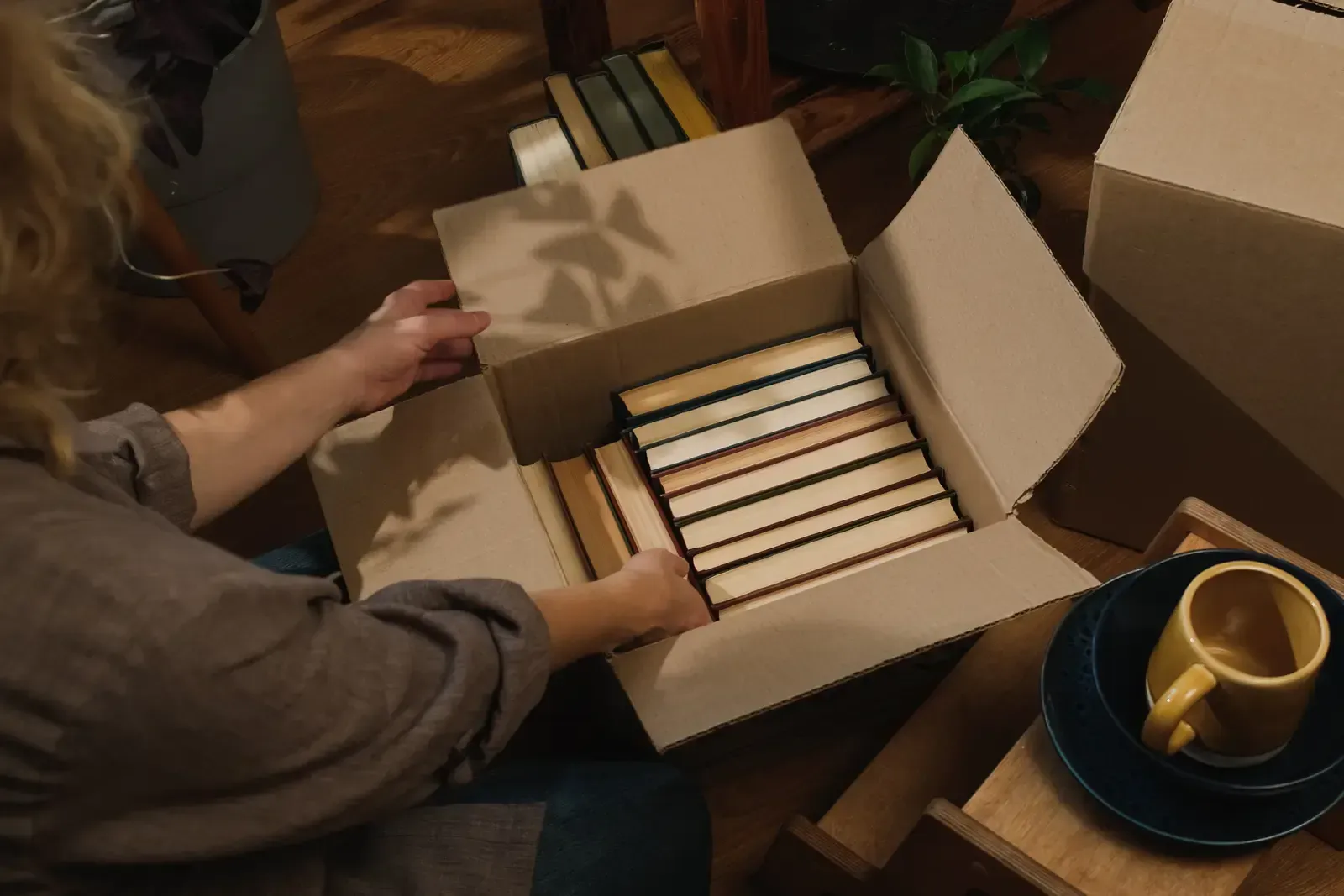
The best way to pack books in a box depends on their size and condition. For most hardcover books, pack them flat with spines alternating directions to distribute weight evenly. Stack three to four books per layer, then add a layer of packing paper or a folded towel before starting the next layer.
Smaller paperbacks can be packed standing upright as they sit on a bookshelf, with their spines facing the side of the box. Fill any gaps with crumpled packing paper to prevent shifting during transport.
Heavier books always go on the bottom of the box, with lighter books on top. Never pack books with the spine facing down or with pages facing down, as this puts stress on the binding and can cause permanent damage.
4. Protect Rare and Valuable Books
Rare editions, first editions, signed copies, and antique books need extra care when packing books for moving. Wrap each valuable book individually in acid-free packing paper—never use newspaper directly on rare books, as the ink can transfer. For particularly valuable books, add a layer of bubble wrap over the packing paper.
Pack rare books in their own dedicated boxes, separate from your general collection. Use plenty of cushioning material around and between books to prevent any movement. Mark these boxes clearly as "FRAGILE" and consider transporting them in your personal vehicle rather than on the moving truck if possible.
Learn more: How to Pack Glasses for Moving Safely
5. Don't Overfill Boxes
One of the biggest mistakes people make when packing books is creating boxes that are too heavy to lift safely. Even though you want to use space efficiently, safety comes first. A properly packed book box should weigh no more than 30-40 pounds so you can comfortably carry it.
Test the weight as you pack. If a box feels too heavy, remove a few books and start a new box. Use the remaining space in lighter boxes for other lightweight items like pillows, linens, or stuffed animals. The best way to pack books to move them safely is to prioritize manageable weight over maximum space utilization.
Learn more: How to Pack Kitchen Items for Moving | Expert Guide
6. Seal and Label Boxes Clearly
Seal each book box securely with packing tape along all seams, including the center seam on the bottom for extra reinforcement. Books are heavy, and you don't want a box bottom giving out mid-move.
Label every box clearly on multiple sides. Write "Books" prominently, then add details like "Fiction," "Cookbooks," or "Children's Books" to make unpacking easier. Mark which room each box belongs in at your new home. If you have books you'll need immediately—like textbooks or your child’s favorite bedtime stories—mark those boxes "OPEN FIRST" with a bright marker.
Learn more: How to Pack a TV for Moving Safely | TV Shipping Guide
Tips For Packing Books to Make Moving Easier
Consider packing books in suitcases with wheels, especially hardcovers and heavy reference books. The wheels make transport much easier, and you're using luggage you'd have to move anyway. For local moves, you can also pack books in reusable shopping bags or bins, though these work best for short distances.
Create an inventory as you pack if you have a large collection. A simple list noting which types of books are in which numbered boxes helps you find specific titles later without opening every box. This is especially helpful if you'll be storing some boxes for a while before unpacking.
If you're on a tight timeline or have an extensive library, consider professional packing services. The trained crews at Stewart Moving & Storage know exactly how to pack books in a box efficiently while keeping them protected. We have the right supplies, the technique, and the experience to handle collections of any size.
Learn more:
- 10 Packing Tips for a Long-Distance Move from Expert
- 7 Essential Cross-Country Moving Tips: Complete Guide
Let Stewart Handle Your Packing For a Smooth, Worry-Free Move
Moving your book collection, or your entire household, doesn't have to be stressful. At Stewart Moving & Storage, we've been helping families relocate successfully for over 25 years. Our professional packing services take the burden off your shoulders so you can focus on settling into your new home rather than worrying about boxes and tape.
Our trained crews know the best way to pack and move books—and every other item in your home. We use high-quality packing materials and proven techniques that protect your belongings from start to finish. Whether you need help with your entire move or just want a hand with the heavy lifting, we customize our services to fit your needs and budget.
We're a family-owned company that treats our customers like family, too. With 12 warehouse locations across Virginia, Maryland, Delaware, North Carolina, and Florida, we have the resources to handle local moves, long-distance relocations, and everything in between. Our team includes over 200 trained professionals and 125+ trucks ready to make your move as smooth as possible.
If you're planning a move and want professional help with packing books or any other items, contact Stewart Moving & Storage for a free quote. We offer convenient estimate options—in-home, online, or by virtual consultation—to fit your schedule. Let us handle the heavy lifting while you focus on the exciting next chapter ahead.
Learn more:
FAQs About How to Pack Books For Moving
How to pack paperback books for moving?
Paperback books are lighter and more flexible than hardcovers, but they still need proper packing to prevent bent covers and creased pages. The best approach is to pack paperbacks standing upright in small to medium boxes, just like they would sit on a bookshelf. Position them with spines facing the side of the box for maximum support.
Fill any empty spaces between books with crumpled packing paper to prevent shifting during transport. If you have particularly valuable or collectible paperbacks, wrap them individually in packing paper before placing them in the box. Keep paperback boxes lighter than hardcover boxes since the flexibility of paperbacks means they need more support from proper box fill rather than relying solely on their structure.
How to pack books for moving overseas?
International moves require extra protection since books will be in transit longer and may go through more handling. Pack books tightly so they don't shift during the long journey, but don't overfill boxes—international shipping weight limits are often lower than domestic moves. Include moisture-absorbing packets in each box if you're shipping to humid climates. Label boxes clearly as "Books" and "Fragile" on all sides. Consider the cost difference between shipping by sea and air—books are heavy, so shipping costs can add up quickly for international moves.
Should you pack books flat or upright?
The answer depends on the book type and size. Hardcover books are best packed flat in stacks of three to four books per layer, with spines alternating directions to distribute weight evenly. This method protects the binding and prevents stress on the spine. Place heavier books at the bottom of each stack.
Smaller paperbacks and mass-market paperbacks can be packed standing upright, spine-side facing the box wall, just like they sit on a bookshelf. This method works well for paperbacks because it maximizes space while providing good support. Avoid packing books with spines facing down or pages facing down, as this puts unnecessary stress on the binding that can cause permanent damage.
Should I use bubble wrap for packing books?
Bubble wrap is necessary for rare, valuable, or antique books that need maximum protection, but it's not essential for your everyday reading collection. For most standard books, packing paper or even clean towels provide adequate cushioning and cost significantly less than bubble wrap.
Reserve bubble wrap for first editions, signed copies, leather-bound books, or books with dust jackets you want to preserve. Wrap these special books in packing paper first, then add a layer of bubble wrap for extra protection. The packing paper prevents the bubble wrap texture from potentially marking delicate covers. For general book packing, focus your budget on sturdy boxes and plenty of packing paper rather than bubble wrapping every single book.
What are common mistakes when packing books?
The most common mistake is overfilling boxes until they're too heavy to lift safely. Books are deceptively heavy, and even a medium box full of hardcovers can weigh 60-80 pounds. Keep book boxes under 40 pounds by using smaller boxes or filling only halfway.
Mixing books with fragile items is also problematic, as the weight of books can crush delicate items, and books themselves can get damaged by shifting objects.
Finally, many people skip sorting and decluttering before packing. Moving books you'll never read again wastes time, effort, and money. Take time to evaluate your collection and donate or sell books you no longer need before you start packing.