
Most people spend weeks planning their long-distance move and don't think about the car until the last minute. Then comes the question: How do you get it there? Driving it yourself adds mileage, time, and fatigue to an already demanding process. Shipping it introduces a whole new set of decisions.
This guide breaks down every option for how to transport a car across the country, what each one costs in 2026, and the exact steps to get your vehicle from your current driveway to your next one without unnecessary headaches.
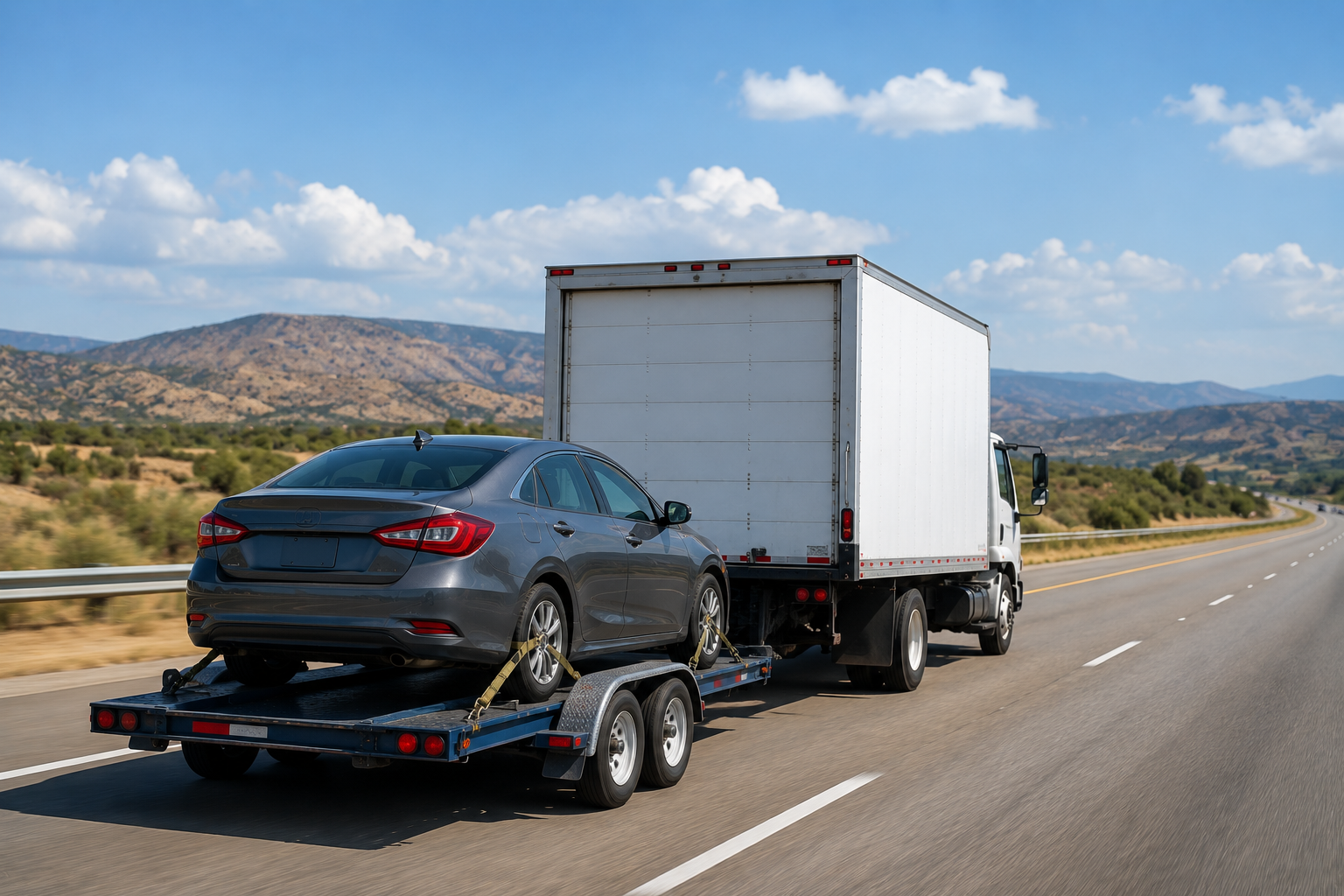
How Do I Transport a Car Across the Country?
You have four realistic options:
- Hire a professional auto transport company
- Drive the car yourself
- Tow it behind a moving truck
- Ship it by rail or air
Most cross-country moves favor professional auto transport, but the right choice depends on your distance, timeline, vehicle type, and budget. The sections below cover each method, then walk through the shipping process step by step so you know exactly what to expect.
Best Ways to Transport a Car Across the Country
1. Hiring an Auto Transport Company
For most cross-country moves, this is the most practical solution. A licensed carrier loads your vehicle onto a multi-car trailer and delivers it to your destination while you focus on everything else.
You'll choose between two trailer types:
Open transport is the standard option. Your car rides on an exposed multi-vehicle trailer alongside other shipments. It's the more affordable choice and handles the vast majority of cross-country auto shipments without issue.
Enclosed transport puts your vehicle inside a covered trailer, shielded from road debris and weather. It costs 30-60% more than open shipping but makes sense for luxury vehicles, classics, or any car you'd rather not expose to the elements.
Most companies offer door-to-door service, meaning the carrier picks up and drops off at specified addresses rather than a central terminal. Terminal-to-terminal is cheaper but requires you to drop off and retrieve the vehicle yourself, often from a less convenient location.
2. Driving the Car Yourself
If you're moving within 500 miles or so, driving your own car is often the simplest call. For true cross-country distances, the calculus changes. Add up fuel, two or three nights in a hotel, meals on the road, and the wear on your vehicle, and the cost difference between driving and shipping shrinks considerably. Factor in the time spent behind the wheel when you could be settling into your new home, and professional transport often wins.
3. Towing Behind a Moving Truck
If you're renting a moving truck, towing your car behind it is a viable option for some vehicles. A tow dolly lifts the front wheels while the rear wheels roll on the road, while a car hauler trailer keeps all four wheels off the ground. Not every vehicle can be towed this way, though. Front-wheel drive cars with automatic transmissions, for example, may require special handling. Check your vehicle's owner's manual before booking, and factor in the added complexity of maneuvering a loaded truck with a car trailing behind it.
4. Shipping by Rail or Air
Rail transport is available on some routes through specialty carriers and can be cost-competitive for certain corridors, though transit times tend to be longer and scheduling less flexible than road transport. Air freight is the fastest option for moving a car across the country and by far the most expensive, often running thousands of dollars. It's generally reserved for high-value vehicles, urgent timelines, or island destinations where road transport isn't an option.
How Much Does It Cost to Transport a Car Across the Country in 2026?
Average Price Range
For a standard cross-country shipment on an open carrier, expect to pay somewhere between $1,200 and $1,900. Enclosed transport typically adds $500 to $800 to that range. Shorter regional shipments under 1,000 miles run lower, often between $600 and $1,000. Prices across the industry in 2026 run roughly $0.60 to $1.20 per mile for open transport, with the per-mile rate dropping as distance increases.
Key Factors That Affect Cost
Several variables move the price in either direction:
- Distance is the biggest driver. Coast-to-coast shipments cost more overall than regional moves, but the per-mile rate is lower on longer routes.
- Vehicle size and weight affect pricing because larger vehicles take up more trailer space and add fuel costs. SUVs and trucks typically run $150 to $250 more than a standard sedan.
- Open vs. enclosed transport is the second-largest cost lever. Open is more affordable; enclosed is for vehicles that warrant extra protection.
- Seasonality matters. Spring and summer are peak season for auto transport, with demand pushing rates 10 to 20 percent above annual averages. Late fall and winter tend to offer lower rates.
- Pickup and delivery location affect both cost and scheduling. Remote addresses or areas with limited carrier traffic may add fees or delays.
- Operability determines loading equipment. Non-running vehicles require specialized loading and typically add $150 to $300 to the base quote.
How Long Does Car Shipping Take?
Most cross-country auto shipments take 7 to 14 days from pickup to delivery. The range reflects variables outside the carrier's direct control: the specific route, how many stops the carrier makes along the way, weather delays, and traffic. Shipments to and from major metro areas tend to move faster because carrier demand on those corridors is higher. If you need your vehicle by a specific date, discuss the timeline with your carrier upfront and ask whether expedited service is available.
Get a quote from Stewart Moving & Storage.
Step-by-Step: How to Ship Your Car Across the Country
Step 1: Compare Car Shipping Quotes
Get quotes from at least three carriers or brokers before committing. Prices can vary significantly for the same route and service level. When reviewing quotes, look beyond the headline price: check what valuation coverage is included, what the cancellation and rescheduling terms are, and whether the company has positive customer reviews.
Step 2: Choose a Reliable Transport Company
A licensed auto transport carrier will have both a USDOT number and an MC (Motor Carrier) number issued by the Federal Motor Carrier Safety Administration. You can verify these on the FMCSA website. If a company can't or won't provide these numbers, walk away. Read recent reviews, ask about their carrier network if you're going through a broker, and confirm what valuation coverage applies to your shipment and under what conditions it pays out.
If you're not sure whether you're dealing with a broker or a direct carrier, our guide to the difference between a moving broker and a moving company is worth a read before you book.
Step 3: Book Your Shipment
Plan to book two to four weeks in advance, especially during peak moving season from May through August. Last-minute bookings are possible but typically cost more and offer fewer scheduling options. You'll likely pay a deposit at booking, with the balance due at delivery. Get all terms in writing before you pay anything.
Step 4: Prepare Your Vehicle
Before your car is picked up:
- Keep the fuel tank at a quarter full or less. A full tank adds unnecessary weight.
- Remove all personal items from the interior. Most carriers prohibit personal belongings in transported vehicles, and anything left inside is generally not covered under the carrier's valuation coverage.
- Disable or deactivate your car alarm to prevent it from triggering repeatedly in transit.
- Document your vehicle's condition thoroughly. Take photos and short videos of all four sides, the roof, the interior, and any existing scratches, dings, or damage.
- Make sure the car is in working order and that the battery holds a charge.
Step 5: Vehicle Pickup and Inspection
When the carrier arrives to load your vehicle, they'll conduct a pre-shipment inspection and document the car's condition on a Bill of Lading. Review it carefully before signing. The Bill of Lading is the official record of your vehicle's condition at pickup and the document you'll reference if anything changes in transit. Note any existing damage yourself and confirm it matches what the driver records.
Step 6: Delivery and Final Inspection
At delivery, inspect your vehicle before signing off. Compare its condition directly to the photos you took at pickup and to the Bill of Lading. If you notice new damage, note it on the delivery paperwork before the driver leaves and contact the carrier to initiate a claim. Signing without noting damage can complicate any follow-up. Many drivers appreciate a tip of $20 to $50 for good service, particularly on long-haul shipments.
Common Mistakes to Avoid
Booking too late. Carrier availability tightens fast in spring and summer. Waiting until two weeks before your move date costs you options and money.
Choosing the lowest quote without checking credentials. An unlicensed or untrustworthy carrier is not a bargain. Verify USDOT and MC numbers before anything else.
Leaving personal items in the car. Items in the vehicle are not covered by most carriers and can be removed or lost without recourse.
Skipping the condition report. If you don't document pre-existing damage at pickup, you have no baseline to reference if new damage appears at delivery.
FAQs About Transporting a Car Across the Country
What is the cheapest way to transport a car across the country?
Open carrier transport is the most affordable method for most shipments. Choosing terminal-to-terminal pickup and delivery instead of door-to-door service can lower the cost further, though it requires you to handle drop-off and retrieval at a carrier facility. Booking during late fall or winter, when demand is lower, also tends to yield better rates than peak-season pricing.
Is it better to ship or drive a car?
For distances over 1,000 miles, shipping is usually the more practical and often more cost-effective choice when you account for fuel, lodging, meals, and vehicle wear. Driving makes more sense for shorter distances, flexible timelines, or situations where you want to bring more belongings in the car. If you're flying to your new location anyway, shipping is almost always the right call.
Can I put personal items in my car during shipping?
Most carriers prohibit it or strictly limit what you can leave inside. Some allow a small amount of weight in the trunk, below the window line, but this varies by carrier. Personal items left in a transported vehicle are typically not covered under the carrier's valuation coverage if they're lost or damaged. The safest approach is to remove everything before pickup.
How do I get a car shipping quote?
You'll need your vehicle's make, model, and year; your pickup and delivery zip codes; your preferred transport type (open or enclosed); and your target pickup date. Stewart Moving & Storage can help coordinate auto transport as part of a broader long-distance move. Request an estimate to discuss your options.