
Most moves don't go wrong during transport. They go wrong during loading. A poorly packed truck means shifting boxes, damaged furniture, and a haul that handles badly, especially on long-distance moves. Knowing how to pack a moving truck correctly before you load the first item can spare you all of that.
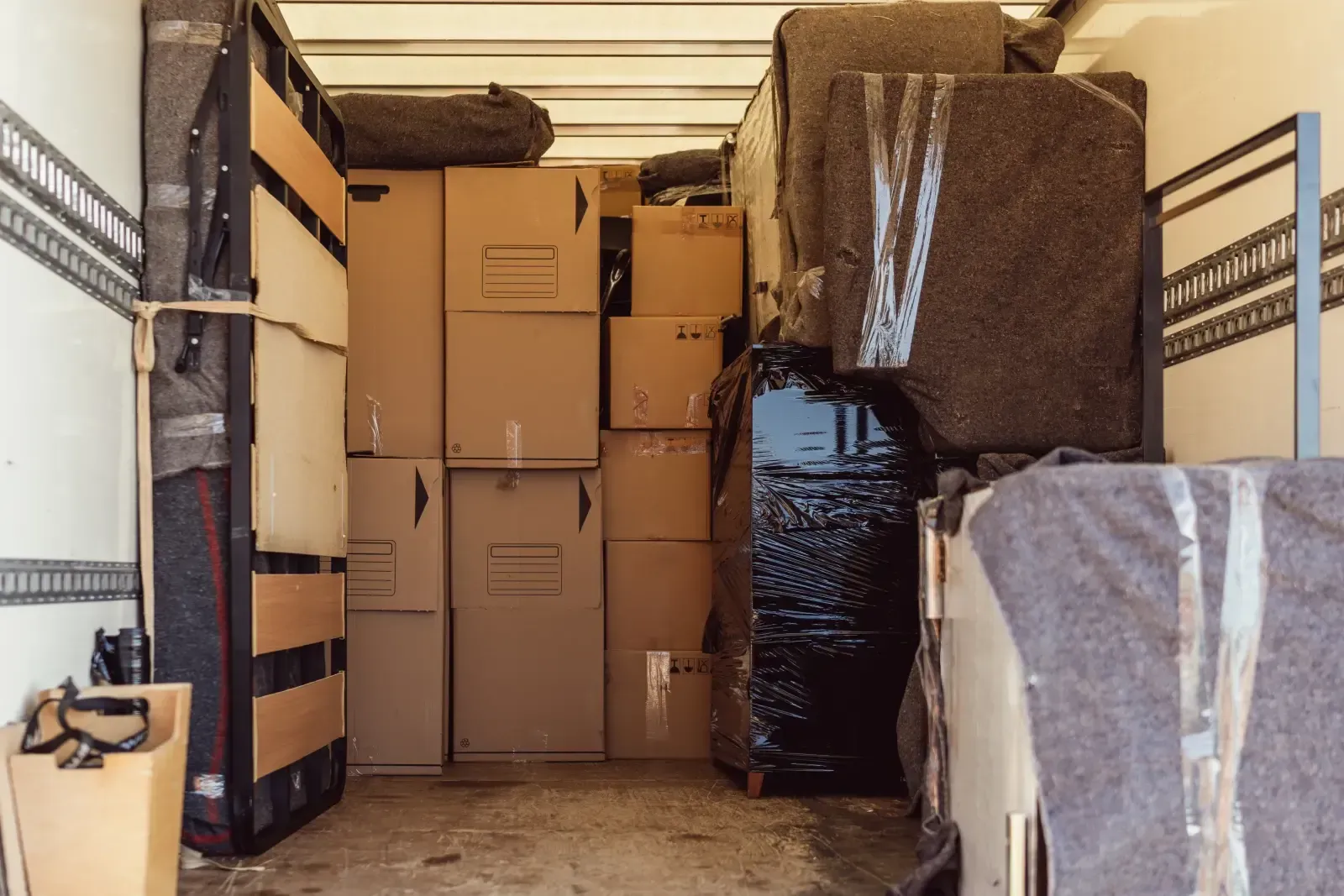
Choose the Right Truck Size
Undersizing forces you to cram or make multiple trips. Oversizing leaves too much open space, which gives items room to slide and tip. A general guide:
- Studio or 1-bedroom: 10–15 ft truck
- 2–3 bedroom home: 20–22 ft truck
- 4+ bedrooms or large homes: 26 ft truck
When in doubt, size up. A little extra space is easier to manage than a dangerously tight load.
Gather Packing Supplies
Have everything staged before the truck arrives. Running back to the hardware store mid-load wastes time and breaks momentum. You'll need:
- Moving blankets and furniture pads
- Ratchet straps and tie-down anchor points
- Stretch wrap or plastic shrink wrap
- A hand truck or appliance dolly
- Box tape and permanent markers for last-minute labeling
Read our Packing Tips Guide to help you get started.
Make a Loading Plan Before You Start
Walk through your home before touching the truck. Identify your largest, heaviest pieces and decide where they'll go against the cab wall. Group boxes by room and weight class so crews (or helpers) can hand off efficiently without sorting on the fly.
Knowing how to load a moving truck starts with a mental map, not muscle.
Disassemble Large Furniture
Bed frames, dining tables, shelving units, and large desks should be broken down before they go on the truck. Disassembled pieces lay flat, take up less floor space, and are far less likely to catch on doorframes or other items during loading.
Keep all hardware (bolts, screws, cams) in labeled zip-lock bags taped to the corresponding piece. Don't drop them in a box where they'll disappear.
Load the Heaviest Items First
Appliances, dressers, wardrobes, and large furniture go in first, positioned against the cab wall at the front of the truck. Keeping the heaviest weight closest to the cab improves vehicle handling and reduces the risk of the load shifting forward during hard braking.
Wrap every furniture piece in moving blankets before loading. This protects surfaces and gives items grip against each other so that they're less likely to slide.
Build Stable Rows or "Tiers"
Think in vertical columns rather than horizontal layers. Stand mattresses, box springs, and large flat items on their sides against the walls. Use tall furniture pieces like wardrobes and bookcases as dividers between sections. This structure is what the rest of the load builds around.
Each row or tier should be as close to ceiling height as possible. A load that fills the vertical space is more stable than one that leaves open air above it.
Pack Boxes by Weight
Once your furniture tiers are in place, boxes fill the remaining space. The rule is simple: heavy boxes go on the floor, medium-weight boxes stack on top, and lighter boxes go at the very top of each column.
Never stack a heavy box on a light one. Crushed boxes create gaps, and gaps mean movement. Keep like-sized boxes together where possible so stacks sit level.
- Read more about how to pack boxes for moving.
Fill Gaps With Soft Items
Every void in the load is an opportunity for something to tip or shift. Use pillows, folded comforters, duffel bags of clothing, and stuffed animals to fill the spaces between and around boxes. These soft items compress without damaging what's next to them, and they add a layer of cushion for fragile contents.
Distribute Weight Evenly
Most people think about loading front-to-back, but side-to-side balance matters just as much. A truck that's heavier on one side pulls during turns and puts uneven stress on the suspension.
As you load, alternate heavy items from left to right across the truck floor. Step back periodically and look at the load from the door — if one side looks visibly fuller, redistribute before you build the next tier.
Secure Everything With Straps
Once a section is loaded, strap it before moving on. Ratchet straps should run from anchor points on the truck walls across the face of each tier. Pull them snug but not so tight that they compress cardboard boxes.
Place moving blankets between straps and any finished wood surfaces. Straps under tension can leave marks on furniture even through light contact. Two to three straps per section is typically sufficient for a well-packed load.
Final Safety Check Before Driving
Before closing the truck door:
- Pull on straps to confirm tension hasn't loosened
- Check that nothing is resting against the roll door
- Make sure mattresses and flat panels are secured upright and not leaning at risk of falling
- Confirm all small loose items (lamps, mirrors, artwork) are wrapped and wedged in place
- Test the door latch from the outside
If anything shifts or resettles when you shake the truck frame, go back in and repack that section.
FAQs About Packing a Moving Truck
What is the proper way to pack a moving truck?
Start with the heaviest furniture and appliances against the cab wall, then build vertical tiers using large items as dividers. Fill in with boxes arranged by weight (heaviest on the floor, lightest on top). Fill gaps with soft items, strap each section as you go, and distribute weight evenly from side to side.
How do you pack a moving truck without damaging anything?
Wrap all furniture in moving blankets before loading. Never stack heavy boxes on top of fragile ones. Use stretch wrap on drawers and cabinet doors to keep them from opening in transit. Avoid leaving open gaps in the load where items can slide, and place padding between anything that could make contact during the drive.
What goes first when loading a moving truck?
Heavy furniture and large appliances go first, positioned at the front of the cargo area near the cab wall. This placement anchors the load, improves vehicle handling, and gives you a stable structure to build the rest of the load around.
How do I keep items from shifting?
A combination of tight packing and straps is the most effective approach. Fill every gap with soft items so nothing has room to move, build tiers to ceiling height where possible, and use ratchet straps to lock each section in place. A load that's properly filled and strapped has very little room to shift.
How many straps do I need?
Plan on two to three ratchet straps per load section, typically two to three sections in a standard moving truck. For a full 26 ft truck, six to eight straps is a reasonable minimum. Having a couple of extras on hand is worth it — straps are inexpensive compared to a damaged piece of furniture.
Should boxes or furniture go first?
Furniture goes first, every time. Large pieces establish the structure and weight base of the load. Boxes fill the spaces around and on top of that structure. Loading boxes first leaves awkward gaps that furniture can't fill cleanly, and it forces heavy items on top of lighter ones.